Updated on: June 23, 2026 / 7:25 AM EDT / CBS/AP
The U.S. government is opposing a plan to auction more than 100 artifacts salvaged from the Titanic wreckage. These artifacts include personal items, currency, kitchen utensils, and décor, as highlighted by newly unsealed court documents.
RMS Titanic Inc., based in Georgia, holds exclusive salvage rights and seeks to auction these artifacts despite prior agreements to display them only in museums and exhibitions. The company’s proposal also includes a global tour across four cities, which remain undisclosed.
Court documents reference the potential sale of items like a bronze cherub, a gold nugget necklace, and a heart-shaped pendant. The National Oceanic and Atmospheric Administration (NOAA) argues such sales breach RMS Titanic’s legal duties at the site, as stated in recent court documents.
The government contends that the auction should be prohibited, noting that the company did not seek court approval for the sale and assumes they face no restrictions. RMS Titanic representatives did not respond to comment requests. However, their attorneys previously mentioned that the auction plan wouldn’t infringe upon existing artifact agreements or court orders.
Previous Attempts to Sell Titanic Artifacts
Since 1987, salvage operations have retrieved thousands of items from the Titanic, including parts of the hull. RMS Titanic generates revenue through exhibitions of these items. Over time, the company has attempted to sell artifacts to support future explorations and cover financial needs, but faced opposition from U.S. courts, preservation groups, and victims’ families.
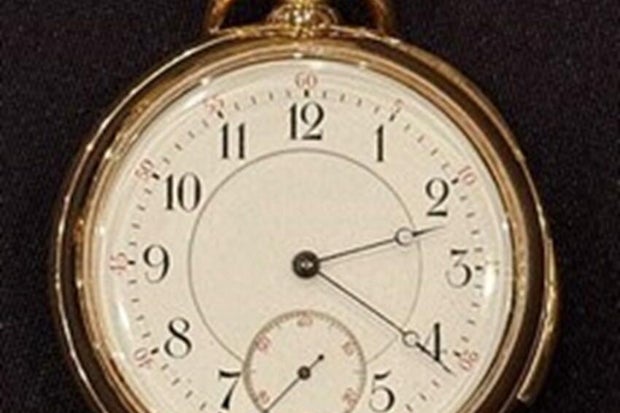
While passenger belongings from the ship can’t be sold, items saved by survivors or retrieved by rescuers often sell for substantial amounts. In April, a life jacket used by a Titanic passenger was sold at auction for $906,000, and a lifeboat cushion sold for $527,000. In 2025, a collector bought a gold pocket watch linked to the Titanic for over $2 million. This watch was gifted by Ida Straus to Isidor Straus, both first-class passengers.
Other sales include a first meal menu, a launch ticket, and a waterlogged letter from passenger Oscar Holverson. In 2013, a violin believed to be played on the Titanic sold for $1.45 million. The enduring interest in the Titanic, which sank in 1912 and resulted in over 1,500 deaths, drives high demand and high prices for artifacts.
Trans-Atlantic Dispute Over Artifacts
RMS Titanic intends to auction some initial artifacts salvaged from the wreck, initially taken to France and awarded to the salvager. The French oceanographic institute IFREMER and Woods Hole Oceanographic Institution discovered the wreck together. Subsequent expeditions led to artifacts retrieved under a U.S. court salvage claim in Norfolk, Virginia.
NOAA insists that all approximately 5,000 items should remain as a single collection under U.S. court conditions. They also state French court conditions prohibit selling artifacts individually. The company counters, stating the U.S. court lacks jurisdiction over items claimed in France. French government representatives have not commented.
The Debate Over Selling Titanic Artifacts
Some undersea explorers oppose selling artifacts, suggesting they should be displayed for public benefit. Ocean scientist Greg Stone supports preserving artifacts with proper archaeological methods, preferring nonprofit management.
Law professor Richard Daynard emphasizes rules for displaying and selling artifacts aim to preserve the wreckage for public benefit. Artifacts should not symbolize wealth or power, he argues. “Acquiring Titanic artifacts to showcase wealth undermines their historical value,” he said.
 Trump’s Influence in Latin America: Political Wins and Strategic Moves
  Flávio Bolsonaro’s Strategic Decision in U.S. Visit
  Russian Scientist’s Death Raises Concerns Over Plague Exposure
  Poland Prepares for Potential Conflict Amid Rising Tensions with Russia
  Drones Redefine Warfare in Ukraine
  Israel Condemns British Green Party’s View on Zionism