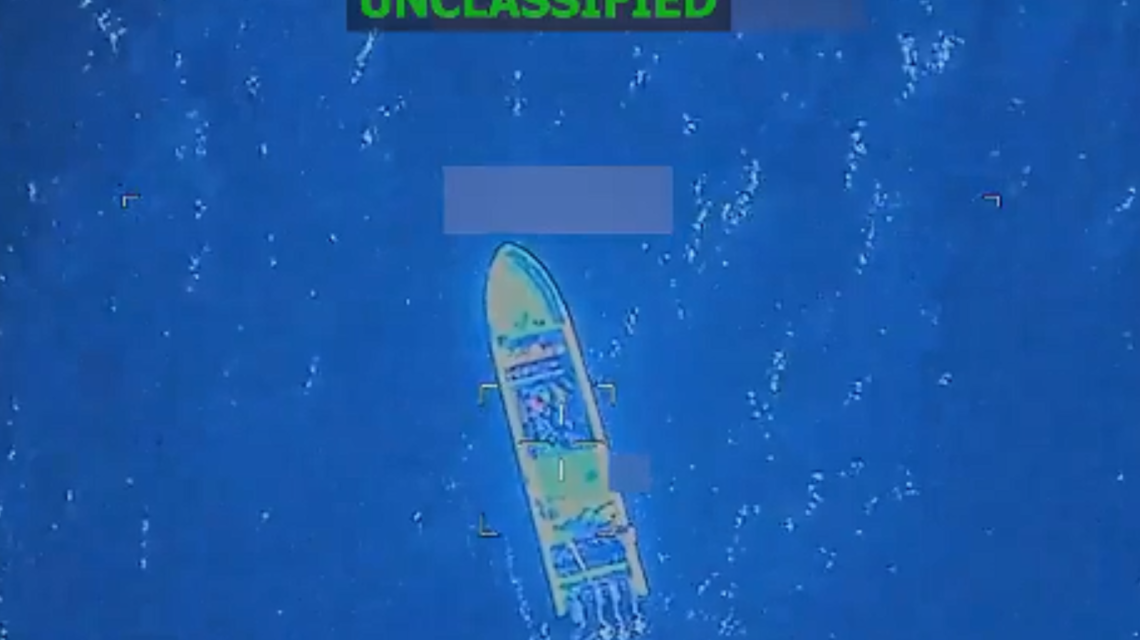
The U.S. military has conducted another strike on a boat, marking the third such attack within a week. The U.S. Southern Command (SOUTHCOM), responsible for military operations in the Caribbean and Latin America, confirmed this recent strike. This operation is part of a contentious campaign against suspected drug smuggling vessels in the eastern Pacific Ocean and Caribbean Sea.
The targeted boat was accused of transporting drugs, and the strike resulted in the deaths of three individuals, described by SOUTHCOM as “narco-terrorists.” Since early September, these operations have reportedly led to over 200 fatalities.
Engagement with ‘Narco-Trafficking Operations’
SOUTHCOM stated the military executed a “lethal kinetic strike” on a vessel managed by Designated Terrorist Organizations. Intelligence indicated that the vessel was navigating known drug-trafficking routes in the Eastern Pacific. This action was part of the U.S. government’s broader efforts to counter drug trafficking into the country, albeit amid criticism and concerns from international bodies and humanitarian groups.
The Trump administration has not released public evidence supporting the claim that the targeted boats were transporting drugs.
Legal Controversies Surrounding the Strikes
The strike followed a previous operation killing two individuals on an alleged drug-smuggling boat. The U.S. government’s stance is that it is engaged in a legal “armed conflict” with drug cartels, a necessary measure to curb drug inflows and safeguard American citizens.
However, voices from humanitarian organizations and international experts have criticized these strikes as unlawful under international law, citing the military’s inability to target non-threatening civilians. The American Civil Liberties Union has dubbed the administration’s claims as “unsubstantiated” and a means of inciting fear. Human Rights Watch and Amnesty International regard the strikes as illegal killings.
Guatemala Denies Approval for U.S. Strikes
With the Trump administration’s measures persisting, Bernardo Arévalo, Guatemala’s President, dismissed claims suggesting the country permitted U.S. military strikes against drug traffickers on its territory. He clarified there is “no agreement” for such activities, contrary to reports arising from a discussion with U.S. Defense Secretary Pete Hegseth.
Arévalo acknowledged Guatemala’s request for U.S. assistance in managing cartels amidst intensified anti-narcotics operations.
Despite assertions by the Trump administration about the crackdown’s necessity, experts have stated the measures have not impeded cocaine flow, the main drug trafficked from South America to the U.S. According to The New York Times, cocaine remains as accessible as before the strikes. The evaluation included analyses of street prices, drug-related fatalities, border seizures, and substance purity.
 ADL Criticizes Wikipedia for Failing to Address Bias in Israel-Related Content
  Sally Rooney’s Books Pulled From UK Shelves Over Support For Palestine Action
  U.S. Military Expands Operations in Latin America
  Salvadoran President’s Plan for Conditional Early Prisoner Release
  Tragic Roof Collapse at Peshawar School: 28 Dead, Many Injured
  Harry and Meghan’s Return to Nottingham: A Day of Charitable Engagements