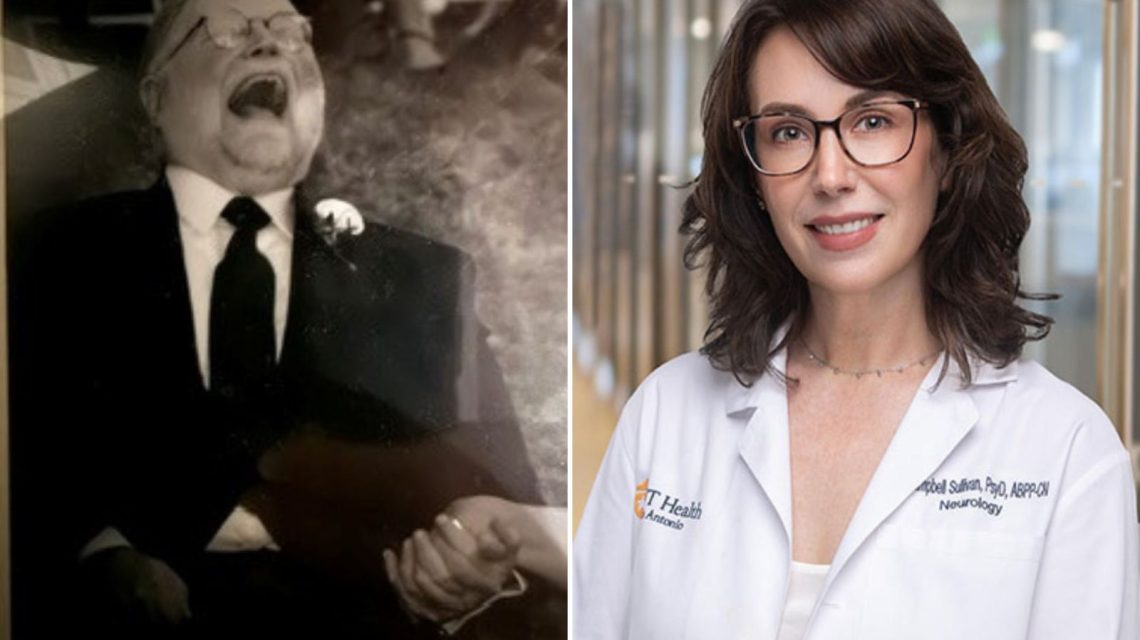
Bellville, a small town in central Texas, was where I grew up without knowing any psychologists or neuropsychologists specializing in conditions like dementia. The field was something I entered almost by chance. During my first master’s degree program, I needed employment and started working as a psychometrist. In this role, I administered neuropsychological tests. Coincidentally, I also trained as an extern at the University of California, San Francisco. The Memory and Aging Center there was among the first globally to focus on frontotemporal dementias (FTD). These disorders gradually damage the brain’s frontal and temporal lobes, leading to changes in thinking, behaviors, and certain movements. It was here I discovered my knack for working with big personalities, prevalent among many patients. Reflecting on this, I suspect it is because my family has many vibrant, expressive personalities.
My father, raised to be well-heeled and genteel, enjoyed provoking humorously. His younger sister, my aunt, shared the same trait. He proudly labeled himself a feminist and, from an early age, instilled in me the belief that I could become anything I wanted. This confidence shaped who I was before understanding how his illness would influence my career direction.
‘I Knew Something Was Wrong, But Didn’t Know Exactly How The Signs Fit Together’
Around 2003, my father began experiencing mobility problems, initially linked to post-surgical complications. Initially, he walked with a slight limp and wore braces, then progressed to using canes, forearm crutches, and by 2009, he was mostly wheelchair-bound. Starting in 2006, behavioral changes were noticeable. His conversations became superficial and his humor juvenile. One Christmas, he stunned everyone by licking his plate at the dinner table, behavior uncharacteristic of him. There were occasions he said hurtful things to me. As an only child, I had no siblings for support, making the experience lonely. During this period, his judgment faltered. He made poor financial decisions, unconcerned he could not maintain his lifestyle.
At that point, I lacked the knowledge to recognize these changes as potential signs of amyotrophic lateral sclerosis (ALS), a nervous system disease affecting nerve cells in the brain and spinal cord, in conjunction with FTD. I had evaluated patients with clear behavioral variant FTD but hadn’t encountered anyone with ALS yet. Although aware something was wrong, I couldn’t see how motor and behavioral symptoms were connected. Years ago, there was limited awareness about the overlap between ALS and FTD.
In 2011, my father passed away at 65. While I was a fellow at Johns Hopkins School of Medicine, Maryland, I focused my training on atypical neurodegenerative diseases. After training, I relocated to San Antonio, establishing a new clinic.
‘FTD and ALS Are Profoundly Misunderstood’
Over the past decade, our clinic mainly manages patients with atypical cases and supports their families. Both FTD and ALS remain profoundly misunderstood, even in medical circles. Patients exhibit a range of changes in personality, judgment, language, motivation, and movement, not always accompanied by the memory loss commonly associated with dementia. Consequently, families often spend years deciphering these diseases’ impacts alone. Some families criticize themselves for not recognizing signs sooner or being stronger advocates. I reassure them that it wasn’t their fault. My own experience with my father made me sensitive to changes in personality, behavior, and relationships.
During training, I gravitated toward patients exhibiting behavioral symptoms, personality changes, and complex family dynamics. I felt comfortable around them, understanding the family’s experience beside them—frustration, grief, confusion, even anger—were emotions familiar to me.
In 2021, my aunt—my father’s sister—started experiencing mobility issues. We had just exited COVID lockdown and hadn’t met for a while, but at my twin girls’ first birthday celebration, she showed foot drop, struggling with stairways. I recognized something amiss. Despite prior changes in judgment, financial miscalculations left her uninsured. I felt helpless, convinced something was wrong, yet unable to finance her care. Thankfully, at the Biggs Institute, we have a philanthropic fund for uninsured individuals. She was accepted into the program, allowing a diagnosis of familial ALS-FTD caused by a TARDBP gene variant. These variants are rare, accounting for only two to five percent of familial ALS cases. She was 61.
‘The Hardest Part Wasn’t Just Telling Her, It Was Telling Her Daughters’
Upon her diagnosis, reality hit hard. I understood what lay ahead over 18 to 24 months. Figuring out how to communicate with her and her daughters was challenging. Her daughters, twins aged 24, presented the toughest aspect of this journey. My aunt passed earlier this year at 62.
There is no cure for these diseases. Consequently, I struggled with whether I wanted to understand what my father and aunt’s diagnoses mean for me and my daughters, given the genetic component.
‘You Don’t Have To Navigate These Diseases Alone’
In my work, I am more empathetic when families consider genetic testing for these conditions. Previously, I believed if a gene exists in one’s family, testing was imperative. Yet I hadn’t faced this decision myself. To improve understanding of these conditions, I encourage patients and families to support research. Much knowledge depends on patients and families contributing time and biological data for studies.
My aunt and her daughters felt the importance of the decision to donate her brain for research after her passing. Her daughters find pride in that choice. I now explicitly support families impacted by ALS and FTD. Many non-profit organizations work tirelessly for these families, emphasizing they need not face these diseases alone.
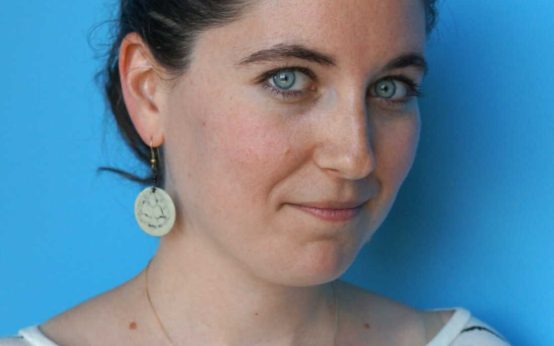
A. Campbell Sullivan, 48, is a board-certified clinical neuropsychologist and associate professor of neurology at UT Health San Antonio’s Glenn Biggs Institute for Alzheimer’s and Neurodegenerative Diseases. She directs the Clinical Core of the South Texas Alzheimer’s Disease Research Center and co-directs the South Texas Frontotemporal Dementia Program. Residing in San Antonio, Texas, she is mother to three daughters aged 6 to 17. In her spare time, she enjoys podcasts, usually non-scientific in nature.
Contact Newsweek editors on this story: Kara Dolman and Emma Lee-Sang
 Concussions Increase Alzheimer’s Risk in Older Adults
  Porsha Williams Opens Up About Her Health Journey
  Communicating with Children about Weight Loss Medications
  Successful Separation of Ethiopian Conjoined Twins
  Rose Friedman: A Dedicated NPR Journalist Remembered
  Notable Lost Stories and Objects