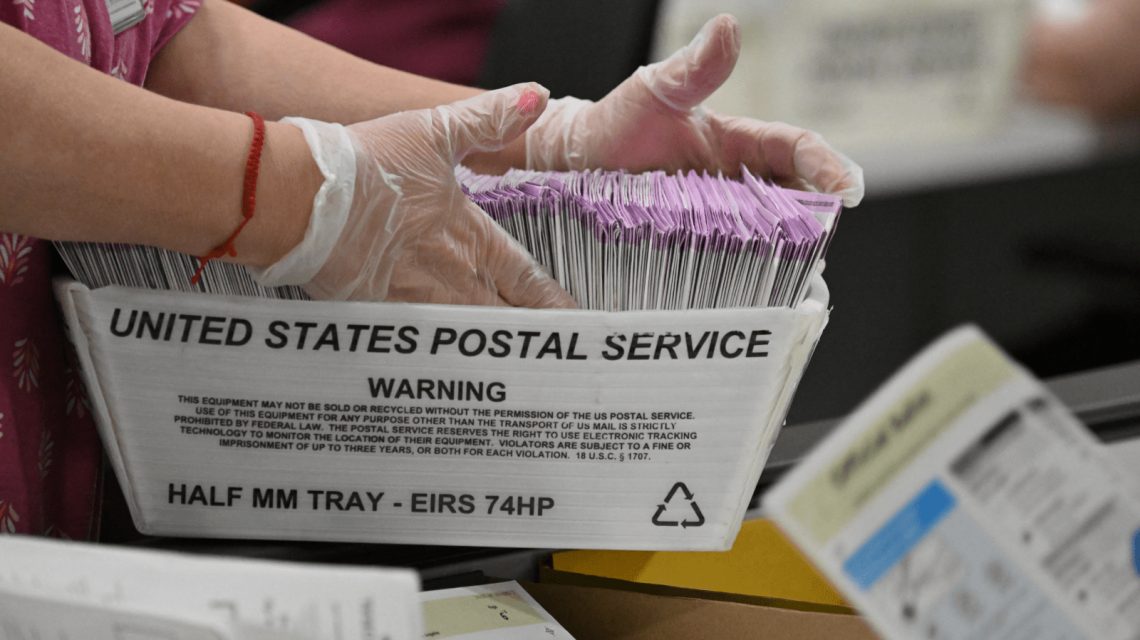
A select group of states that primarily use mail-in voting is at the center of a significant debate. This discussion could determine whether millions of ballots reach voters in the upcoming fall elections. At the heart of this issue are proposed rules from the U.S. Postal Service (USPS) linked to President Donald Trump’s executive order on election administration dated March 31, 2026. The order could mandate states to submit detailed lists of mail voters or face blocked ballot deliveries.
In the 2024 election, over 48 million Americans voted by mail, about one-third of all voters nationwide. With the 2026 midterm elections nearing, experts warn that the new rules could disrupt voting in states where mail-in voting is not merely an option but the primary voting method.
Currently, 23 Democratic-led states and Washington, D.C., are challenging the proposal in court. A federal appeals court could issue a ruling this summer, as states prepare for the November midterm elections.
Why It Matters
President Trump signed the executive order ensuring citizenship verification and integrity in federal elections, as part of a series of efforts to increase federal oversight of elections. Despite repeated claims of widespread fraud, these claims have never been substantiated. Key points of the order include the Department of Homeland Security compiling state-by-state lists of voting-age citizens and USPS developing rules to ensure ballots are sent only to voters on approved lists, with the use of tracking systems and unique barcodes.
The constitutional framework places election oversight primarily with the states. This proposal positions mail carriers as potential gatekeepers, a shift that has triggered legal challenges. The USPS proposal requires states to submit names, addresses, and ballot-specific barcodes for mail voters, allowing the agency to reject mailings that do not meet these standards.
An Unprecedented Role for USPS
The proposal changes USPS’s role from a logistics provider to an active participant in federal elections. Presently, USPS delivers ballots, registration forms, and voter notices securely and reliably. In 2024, the agency reported delivering 99.22 million ballots, with 99.88 percent arriving within seven days.
The new rules would demand USPS to verify that each recipient is on a state-provided voter list before delivering a ballot. The plan includes creating a federal “Mail-In and Absentee Participation List” through a new digital portal, along with mandatory envelope designs and tracking systems linked to individual voters.
Former Postal Service Board of Governors Vice Chair Anton Hajjar noted the risk of USPS not delivering ballots with proper postage. Postal unions have expressed concerns, with Brian Renfroe, president of the National Association of Letter Carriers, highlighting the position in which this places carriers.
The States Most Affected
The impact of the proposed rules would be most significant in states where mail voting is foundational, not optional. States like California, Oregon, Washington, and Colorado mail ballots automatically to registered voters, with the postal network serving a critical role.
Data shows that eight states and Washington, D.C., now conduct “all” or “mostly” mail elections, while all states offer some type of mail voting. In high-mail states, any disruption could impair the primary method of voter participation.
Tobias Read, Oregon’s Secretary of State, emphasized that the order could deny eligible individuals the right to vote. Maine’s Secretary of State Shenna Bellows warned that if courts uphold this policy, mail-in voting could effectively be eliminated unless states provide voter lists to the federal government.
Battleground States Watching Closely
For states like Arizona, Nevada, and Michigan, which have substantial mail-voter populations but do not rely solely on mail, the proposed changes could also be impactful. These states frequently decide federal elections with narrow margins, and any disruption in ballot delivery might affect voter turnout dynamics.
The issue is one of compliance and timing. Ballots are usually mailed weeks ahead of elections, requiring states to finalize their systems far in advance.
A Data Battle at the Core
The central conflict lies in the data. The executive order mandates federal agencies to create citizenship databases tied to voters, with ballot delivery dependent on state-provided lists. The USPS rule introduces a way for states to share voter data if they wish to have ballots delivered.
Amanda Gonzalez, clerk of Jefferson County, Colorado, describes this development as an attempt to access voter data despite previous refusals. However, the White House argues the executive order will be implemented by the upcoming election.
Legal Fight Over Federal Power
The central legal issue revolves around who has control over elections. The Constitution assigns states the power to determine the “times, places, and manner” of elections with congressional oversight. Plaintiffs argue the order infringes on this authority through executive action.
A federal judge has not blocked the order, stating that challenges were premature as the policy is not fully implemented. Appeals are ongoing in the D.C. Circuit, which could significantly impact the federal role in elections.
Can USPS Implement This System?
Even if courts approve the rules, USPS must create a digital portal for managing voter lists and tracking ballots, which does not currently exist. There are logistical concerns for an already strained agency that handles millions of election mailpieces.
In 2024, USPS effectively delivered ballots rapidly, indicating a system adept at handling volume. Expanding responsibilities to include verification and data integration could be a major operational challenge. Matt Crane from the Colorado County Clerks Association questions whether USPS can expand its mission with current resources.
What’s Next?
The immediate focus is on upcoming judicial decisions. The D.C. Circuit Court of Appeals will decide whether the USPS rule advances before ballots are mailed for midterms.
Other indicators will provide insight into the situation’s development, such as whether USPS launches a voter-list portal, the DHS releases citizenship lists, or states comply with federal data demands. The result will impact this election cycle and potentially reshape U.S. elections for the future.
The reliance on mail voting is well-established across various political and demographic groups. For states dependent on mail systems, this proposal could fundamentally alter the voting process just as Americans prepare to vote.
 House Races Shift Amid Democratic Momentum
  Iowa Senate Race: Marist Poll Shows Democrat Josh Turek Leading Republican Ashley Hinson
  Kamala Harris and Abdul El-Sayed Campaign Together in Detroit
  Challenges Facing the Supreme Court’s Public Perception
  California Democratic Aide Arrested for Visa Overstay by Federal Authorities
  Experts Doubt Export Ban Will Lower Fuel Prices