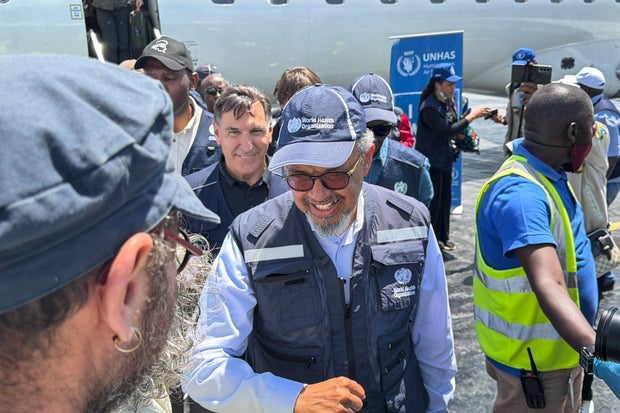
On Saturday, the head of the World Health Organization visited Bunia, a city in eastern Congo central to an Ebola outbreak. Despite improved health facilities and new aid, the virus is spreading faster than the response efforts. WHO Director-General Tedros Adhanom Ghebreyesus plans to meet local authorities, health workers, and affected families.
“The best way to address this is to provide all the necessary support to fight the disease at its epicenter and to continue offering every assistance needed,” Tedros stated to reporters.
Recent figures from health authorities show 906 suspected cases and 223 suspected deaths, though the actual numbers could be three to four times higher. In neighboring Uganda, officials confirmed nine cases and one death.
The current strain, known as the Bundibugyo virus, lacks approved treatments or vaccines. Tedros emphasized confidence in the Democratic Republic of Congo’s ability to manage the outbreak, despite the challenges.
Last week, the WHO upgraded its national risk assessment to “very high.” Tedros noted the rapid spread of the outbreak. Medical aid from the European Union arrived in Ituri, and more aid is forthcoming. The U.S. announced an additional $80 million in aid, totaling over $112 million committed.
Response Efforts Struggle Amid Fast Spread
While facilities in Bunia, such as Rwampara and General hospitals, have better organization, the outbreak spreads quickly. A Doctors Without Borders (MSF) representative remarked on the unprecedented number of cases soon after the outbreak’s declaration. MSF calls for expanded testing, quicker deployment of aid workers, and more medical supplies.
Health workers face risks due to local anger over burial protocols. Residents attacked health centers, and regional conflicts further complicate the response. Outbreaks have also occurred in the Congolese provinces of North Kivu and South Kivu, controlled by the M23 rebel group.
Border Closures and Global Measures
Uganda and Rwanda closed borders with Congo. Tedros criticized these closures, saying they do not prevent the outbreak’s spread. Transparency from Congo is encouraged instead. U.S. measures include banning entry of non-U.S. passport holders from affected regions. Airports conduct health screenings, with symptomatic travelers potentially sent to hospitals.
A Kenyan court temporarily blocked plans to establish a U.S. Ebola quarantine facility there.
 Potential Changes in Medicare Reimbursement for Lab Tests
  New U.S. Military Bases Planned in Greenland Amid Strategic Security Deal
  Understanding and Addressing the Complexity of Suicide
  Twitch Streamer Hasan Piker Discusses Controversial Commentary
  A Shifting Political Landscape: The Decline of Autocratic Power
  Recall of Meat Products from Star Meat Delivery Inc.