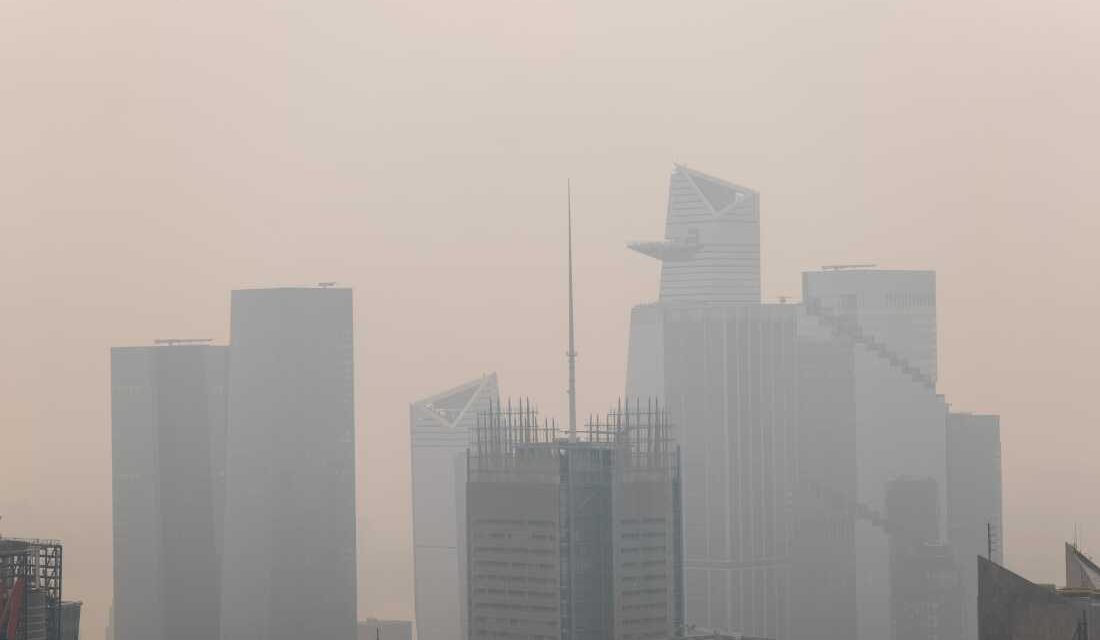
The U.S. is experiencing widespread hazardous air due to smoke from Canadian wildfires. Regions including the Great Lakes, New England, and Maryland are under alerts for poor air quality. Sparked by extreme heat and dry conditions in Ontario and northern Minnesota, these wildfires have intensified.
As of July 13, over 800 wildfires are active in Canada, fed by record-breaking temperatures forming a heat dome in western Ontario and Minnesota. Temperatures have soared above 100 degrees. Derek Mallia, a professor of atmospheric sciences at the University of Utah, reports unprecedented wildfire expansion. Social media shows Ontario’s raging fires and smoke-filled skies. Air Quality Ontario rates air quality as “very high risk” in several areas, prompting evacuations.
AirNow observes worsening air quality in Minnesota, Wisconsin, and Michigan. Midwestern smoke drifts towards northeastern cities including Philadelphia, New York City, and Baltimore. Mallia describes the influx as akin to a “firehose of smoke,” expected to persist through the weekend.
Wildfire Smoke Concerns
Wildfire smoke consists of tiny particles that penetrate deep into the lungs, entering the bloodstream. Dr. David Eisenman of the David Geffen School of Medicine at UCLA warns of increased risks of heart attacks, strokes, respiratory illnesses, and developmental disorders from chronic exposure. Air pollution, comparable to smoking and high cholesterol, is a leading cause of premature deaths worldwide. Eisenman emphasizes checking air quality even if skies appear clear due to “invisible” pollutants.
With temperatures exceeding 100 degrees, compounded smoke and heat pose severe health threats. To mitigate risks, Eisenman advises using EPA’s guidelines on wildfire smoke. These include monitoring air quality, utilizing air purifiers, creating “cleaner air rooms,” and stocking essentials to reduce the need to go outside. Based on air quality, limit outdoor activities and wear an N95 mask if necessary.
 Challenges in California’s Home Insurance Market
  Examining Testosterone Therapy for Menopausal Women
  Race Against Time: Preserving Quinhagak’s Archaeological Heritage
  Long-Term Health Impacts of the 9/11 Attacks
  The Link Between Type 2 Diabetes and Mental Health Conditions in Women
  Debate on BMI and Race in Medical Guidelines