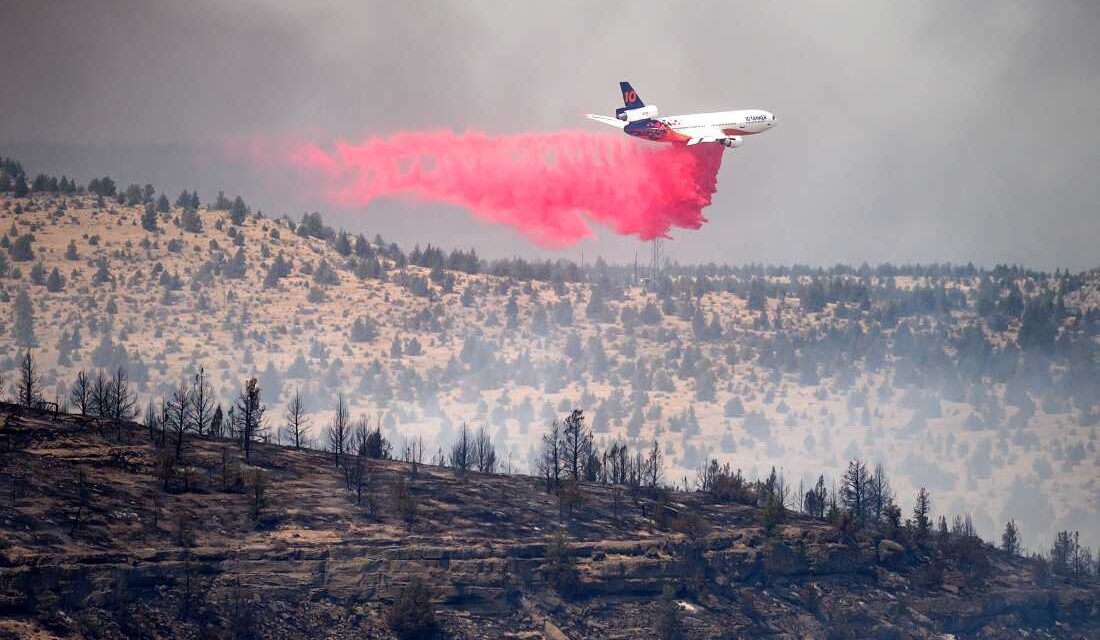
Efforts to combat the Bench fire in Jefferson County, Oregon, highlight the scale of the state’s ongoing wildfire crisis. Over a million acres have burned across central and eastern regions, indicating a severe and extensive wildfire season. With 34 major fires active, smoke currently covers vast areas, impacting air quality as far as Boise, Idaho, affecting more than 700,000 people.
Early Fire Season Concerns
Although early in the fire season, officials urge ongoing caution. Fires predominantly affect lower altitudes, but higher altitude forests also remain at risk. Oregon recorded its lowest snowpack on record last winter, leaving forests exposed as the state enters hotter months.
Larry O’Neill, climatologist at Oregon State University, states, “We’re holding our breath right now that the weather conditions will moderate though that’s not looking likely.”
Lightning and Winds Fuel Fires
Recent lightning storms, accompanied by strong winds and minimal rain, ignited fast-spreading fires. Many have evacuated from small towns across central and eastern Oregon, while ranchers move cattle to safer areas. Though fires are remote, they impact livelihoods significantly.
Mary Thompson, a resident near the Coleman Creek Fire, expresses frustration that rural fires receive minimal attention. “This is our livelihood,” she notes, as people work together to keep cattle safe.
Impact on Ranchers
Fires threaten grazing lands, forcing ranchers to buy expensive hay. Local beef ranchers largely depend on federal public lands. Thompson states, “So far, I haven’t heard of anybody losing any cattle yet,” as local brigades unite to combat the fires.
Travel Disruptions
Smoky conditions hinder travel, with highways and Interstate 84 intermittently closed. Kara Barnes, stranded in Harper, voices frustration with delayed efforts to manage fires promptly. Wildfire resources are scarce, as shared challenges stretch across states.
Funding and Climate Change
Budget cuts in federal fire prevention compounds the wildfire threat. With 10,000 jobs cut, crucial wildfire prevention positions have been affected, coinciding with record heat and dryness due to human-induced climate change.
Larry O’Neill explains, “When you get these warmer temperatures, basically the atmosphere just sucks all the moisture out of the landscape much quicker after winter.”
The lack of immediate weather relief means prolonged smoke advisories and evacuation alerts will likely continue.
In Huntington, Oregon, Catherine Randall faced evacuation due to the advancing Tartar Fire. “I just grabbed my computer and a couple other things,” she remarks. Despite the circumstances, Randall maintains some optimism, noting the smoke offers slight respite from the heat by partially blocking the sun.
 Cold Weather Alerts and El Niño Influence
  Turning Home Food Waste into Compost: A Guide
  Chicagohenge: When Sunlight Aligns with City Streets
  Fat Bear Week 2026: A Look at the Contest and Its Competitors
  California Governor Declares Statewide Emergency Ahead of El Niño Storms
  EPA Rollbacks and the Impact on Indiana Communities