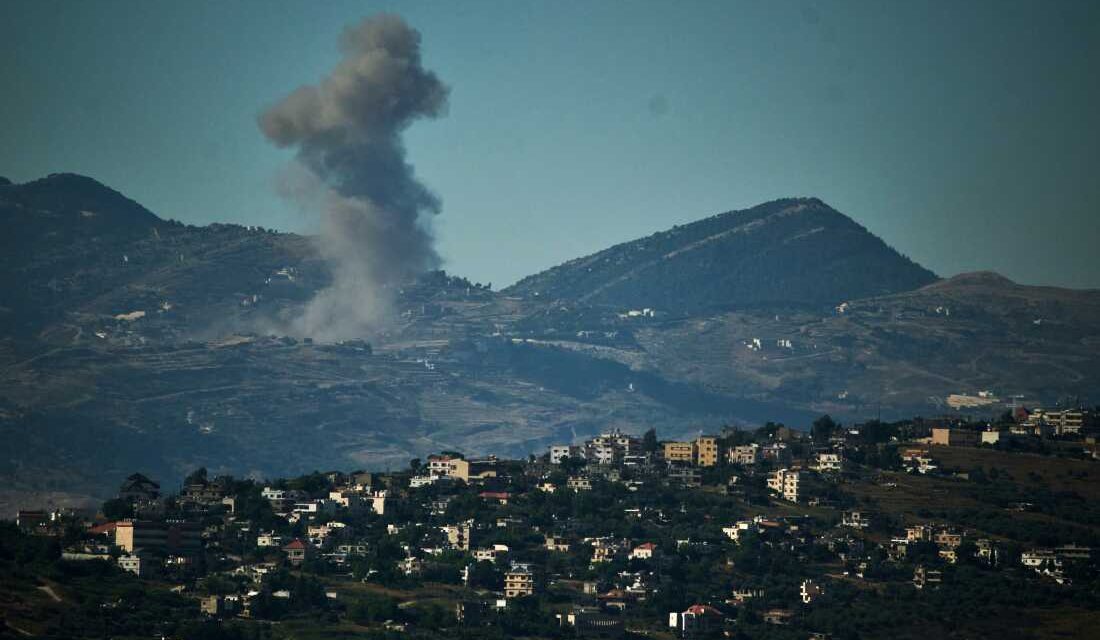
On Saturday, Israeli strikes in southern Lebanon resulted in the deaths of at least seven individuals, including two children. These developments occurred shortly after reports of a potential ceasefire. The ongoing conflict puts at risk a recent interim agreement between the United States and Iran aimed at ending Middle Eastern hostilities.
According to Lebanon’s National News Agency, the strikes targeted the town of Nabatiyeh and nearby villages. Seven people reportedly remain trapped under rubble. International mediators are working to halt the fighting between Israel and Hezbollah, following a violent exchange on Friday that claimed 47 lives in Lebanon and four Israeli soldiers. An Israeli military official, speaking anonymously, mentioned that Hezbollah fired over 50 projectiles, prompting Israeli military actions.
Israeli ambassador to Washington, Yechiel Leiter, emphasized on the social media platform X, Israel’s willingness to uphold a ceasefire if Hezbollah ceases hostilities. While Hezbollah has publicly agreed to a ceasefire if Israel does, there is no confirmation from them that a ceasefire is in effect. A Hezbollah official revealed ongoing mediation efforts by Qatar, the U.S., and Iran, but did not verify the existence of a finalized deal.
Implications for the US-Iran Deal
The current conflict intensified after the U.S. and Israel launched attacks on Iran on February 28. Amidst this, Hezbollah attacks targeted northern Israel, resulting in the latter seizing parts of southern Lebanon. An interim agreement signed this week between the U.S. and Iran has led to the reopening of the Strait of Hormuz, critical for global oil and gas supplies. It may also restart talks on Iran’s nuclear program, though Israel and Hezbollah are not participants in this agreement.
With continued hostilities, the accord faces potential collapse. U.S.-Iran discussions in Switzerland, previously set for Friday, have been delayed. As of now, no alternative date has been provided. Israeli Prime Minister Benjamin Netanyahu remains adamant about maintaining Israeli forces in Lebanon until threats are neutralized, while Hezbollah demands Israeli withdrawal as part of any deal.
Violence at the Israel-Lebanon Border
In southern Lebanon on Saturday, smoke was seen rising, and Israeli jets conducted operations over Tyre. A strike in Barish claimed the lives of four family members. In Arab Salim, a body was discovered beneath debris, and drone strikes in Doueir and Kfar Rumman resulted in further casualties.
Netanyahu has not commented publicly on ceasefire negotiations. However, he noted that Israeli military actions targeted 150 Hezbollah sites, reportedly killing many militants. Military spokesperson Brig. Gen. Effie Defrin asserted that Israeli forces would continue their ‘forward defense zone’ operations.
Delays in Diplomatic Efforts
Iranian officials, due to travel for talks in Switzerland, postponed their plans, demanding that fighting in Lebanon ceases first. U.S. Vice President JD Vance also delayed his trip. Iran’s Foreign Ministry spokesperson Esmail Baghaei stated that Pakistan’s interior minister is scheduled to visit Iran as part of ongoing negotiations. These efforts relate to formulating a final U.S.-Iran agreement following the digital signing earlier this week.
While the Swiss talks are not deemed urgent, discussions were to focus on Iran’s nuclear ambitions. Tehran claims its program is peaceful, though the International Atomic Energy Agency notes Iran holds significant enriched uranium reserves that could be weaponized.
Potential Outcomes and Challenges
Crafting a new nuclear agreement with Iran is anticipated to be complex. The 2015 nuclear deal took over 18 months to complete. The interim agreement allows 60 days to reach a new accord, potentially extendable. Its incentives include lifting international sanctions and establishing a $300 billion reconstruction fund.
Post-signing, the U.S. lifted its port blockades, facilitating Iranian oil sales. The agreement also involves unfreezing Iran’s assets, although specifics about the timeline remain unclear.
 Trump Delivers Warning to Iran, Cuba at UN General Assembly
  Lukashenko and Putin’s Unique Relationship and Belarus’ Strategic Role
  Alan Ritchson Faces Backlash Over Political Remarks
  Himalayan Pilgrimage: A Couple’s Narrow Escape and Lingering Questions
  Former CEO Sentenced for Bank Fraud and Sanctions Evasion
  Russia’s Potential Incursion Into Estonia: NATO’s Resilience Under Scrutiny