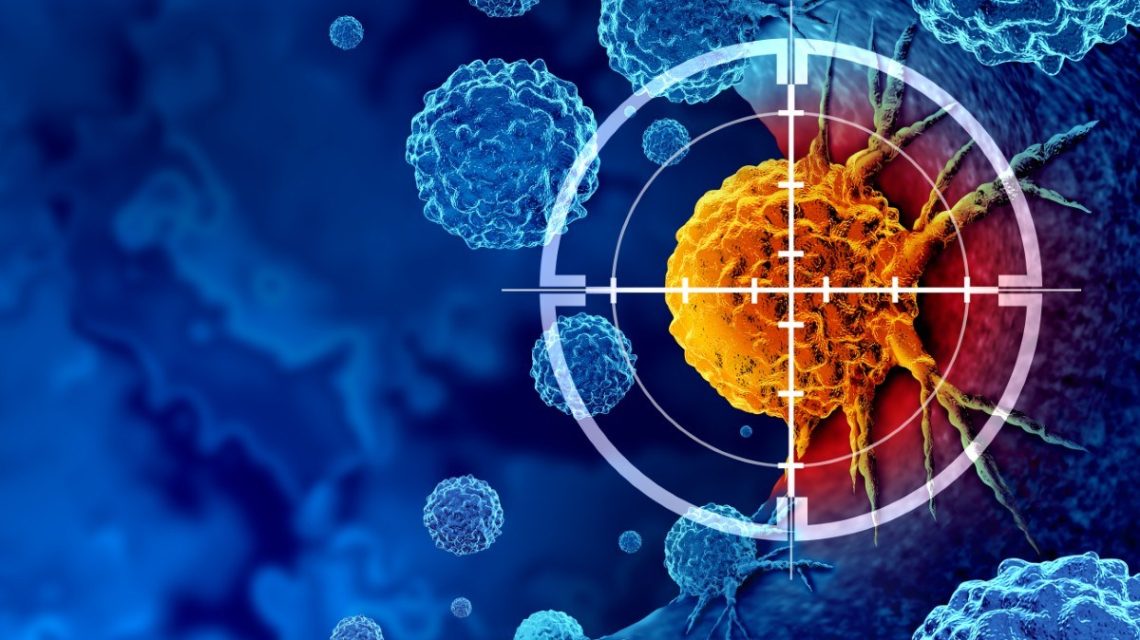
Researchers have discovered that compressing cancer cells or tightly confining them can lead to their self-destruction. Experts at Fudan University, Sun Yat-sen University, and the Chinese Academy of Sciences in Shanghai used three-dimensional models to study cancer cells’ behavior when they are mechanically confined over extended periods. These findings show that, when trapped in tight spaces, the cells undergo a chronic stress response that influences their metastatic behavior—normally enabling them to spread—and ultimately results in cell death. The study appeared in the Cell Press journal Developmental Cell on October 14.
What the Study Found
The researchers examined cancer cells during a stage of development called the mesenchymal-to-amoeboid transition (MAT). This transition is a quick biological process in which cells adapt to fit through narrower spaces in their environment without requiring genetic transcription.
Study authors Liming Sun and Yan-Jun Liu explained to Newsweek that one major physical challenge faced by cancer cells during metastasis is navigating extremely narrow spaces as they split from the primary tumor and enter surrounding tissues. To replicate this challenge, the authors created a system that “gently compressed” the cells into a thin space without allowing them to attach to surrounding surfaces. This setup closely resembled the stress-filled journey of cancer cells. Over several hours, researchers observed the transition of cells from a fast-moving, amoeba-like state endeavoring to escape, to an unexpected state of halted movement, triggering intrinsic cell death mechanisms.
As pressure increased, the trapped cells interpreted their environment as hazardous, releasing signals culminating in cell death. The researchers saw that prolonged physical confinement put lasting stress on these cells. This process activated mixed lineage kinase domain-like (MLKL), a key inducer of cell death.
Sun and Liu noticed that before the cancer cells succumbed to death, they initially lost their polarized shape and movement capability, halting invasive behaviors. However, this stage also showed tumors enriching for MLKL-low, necroptosis-resistant clones, indicating increased aggression.
Tests across multiple cancer cell types provided similar observations, implying a possible universal principle of tumor cell responses to extended physical stress. However, researchers acknowledged that the extent of the response may vary based on genetic backgrounds and cancer characteristics, necessitating further studies.
What the Findings Mean
The study suggests that prolonged mechanical stress within tumors can serve as a natural barrier, preventing cancer cell spread. While this process eliminates invasive tumor cells, it also supports immune recognition of the tumor.
High MLKL expression may act as a biomarker for tumor progression and metastatic potential. In the study, cells with elevated MLKL expression were more susceptible to mechanical checkpoints, while those with lower expression often survived prolonged confinement. Over time, this selectivity might encourage the growth of escape clones that exhibit heightened migratory and invasive traits.
Measuring MLKL levels might thus help understand tumor evolution during disease progression. These insights could lead to new therapeutic strategies. One approach might involve activating MLKL pharmacologically to enhance MLKL-dependent necroptosis, potentially aiding the elimination of cancer cells under mechanical stress.
The study suggests therapies should consider both biochemical pathways and the mechanical environment of tumors. Combining strategies to restore or activate MLKL with standard cancer treatments could potentially bolster the body’s natural defenses against metastasis.
Reference: Zhang W, Wang Y, Zuo C et al (2026) Long-term confinement triggers RIPK3-independent necroptosis in amoeboid cancer cells to shape tumor evolution Developmental Cell.
Contact Newsweek editors on this story: Kara Dolman and Paul Donnelley.
 Setback in the Search for Amelia Earhart’s Missing Plane
 Researchers Redefine Early Human Migration Timeline in North America
 Japan’s Mission to Explore Mars’ Moons
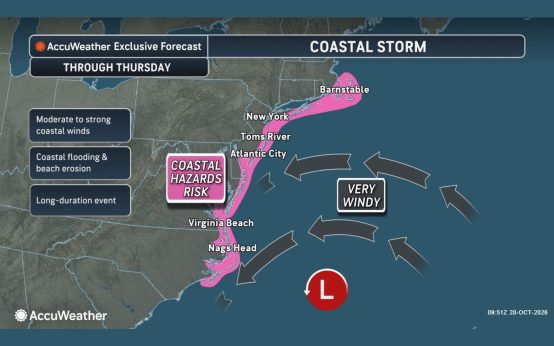 Nor’easter Threatens East Coast with Strong Winds and Coastal Hazards
 Gulf of Mexico’s Twilight Zone Ecosystem Severely Impacted by 2010 Deepwater Horizon Oil Spill
 Reassembling the F-117 Nighthawk at Smithsonian