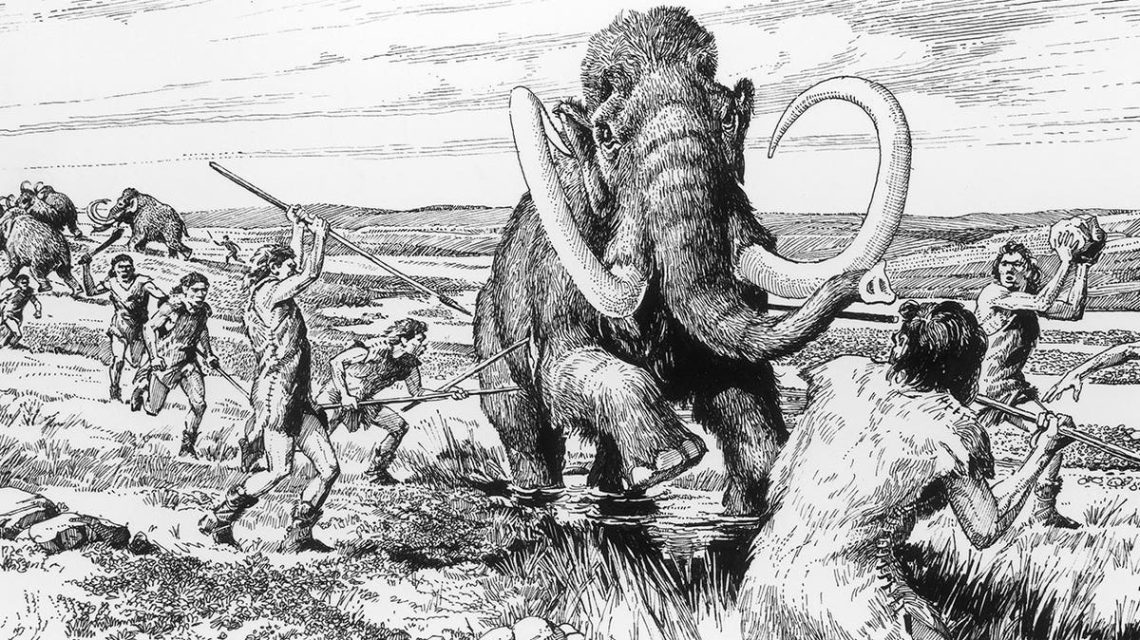
Researchers have re-examined ancient DNA to shed light on the timeline of early human migration into North America. This study addresses a mystery that has challenged scientists for years. The new timeline narrows down the arrival of humans in the Americas to between 14,000 and 20,000 years ago. Previously, many believed humans first arrived around 13,500 years ago, an idea known as ‘Clovis First.’
The study, set to appear in the December 2026 issue of Current Opinion in Genetics & Development, uses genetic and archaeological evidence. One significant discovery includes 23,000-year-old human footprints at White Sands National Park in New Mexico. These footprints suggest an earlier human presence than supported by current genetic data.
The footprints provide evidence that humans may have been in North America earlier than genetic models indicate. (Museum of London/Heritage Images/Getty Images)
Researchers, led by Bethany Potter and Savannah Hay of the University of Kansas, evaluated ancient DNA and archaeological records. They considered the possibility of early populations without surviving descendants or unsampled genetic lineages.
The study compares published genetic data from ancient human remains in Asia and the Americas. This comparison traces shared ancestry and how early Indigenous groups diverged into distinct lineages. Some ancestral lines split around 21,000 years ago, according to their findings.
The study highlights a division of ancestral Native American populations into northern and southern groups approximately 15,500 years ago. This split likely occurred south of significant ice sheets covering large parts of North America, indicating a prior human presence on the continent before this split.
The researchers caution that there are still uncertainties about the exact dates and locations of key divergence events. The genomic data shows a complex picture of migration, with a small group initially entering the uninhabited American continents.
Genomic insights reveal the complexity of the peopling of the Americas, differing significantly from traditional theories. (iStock)
This research also ties into broader archaeological studies using ancient DNA. Earlier in the year, DNA evidence in manuscripts and mummies has revealed the presence of diseases like smallpox in historical populations, showcasing the role ancient DNA continues to play in our understanding of history.
 Setback in the Search for Amelia Earhart’s Missing Plane
 Japan’s Mission to Explore Mars’ Moons
 Cancer Cells’ Response to Confinement
 Nor’easter Threatens East Coast with Strong Winds and Coastal Hazards
 Gulf of Mexico’s Twilight Zone Ecosystem Severely Impacted by 2010 Deepwater Horizon Oil Spill
 Reassembling the F-117 Nighthawk at Smithsonian