Authored by Jennifer De Pinto and Fred Backus, this report, published on June 11, 2026, discusses the American public’s beliefs regarding extraterrestrial life. It also examines the government’s handling of UFO information.
Belief in Extraterrestrial Life
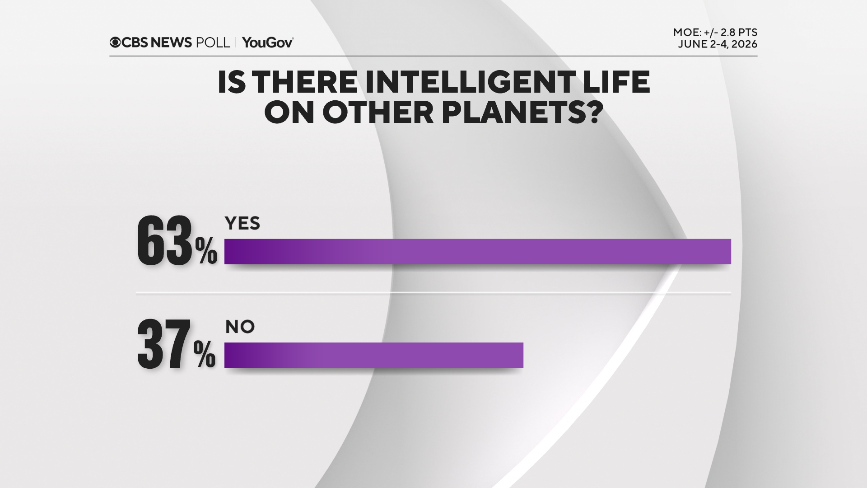
Many Americans think intelligent life exists beyond Earth. A substantial number believe that contact with aliens has already occurred, while others anticipate it in the future. Interest in UFOs has increased, partly due to the government’s release of pertinent files. Watching these videos reinforces some people’s beliefs about prior alien visits.
Reactions to the Idea of Aliens
If aliens were to visit Earth, Americans indicate they would greet them with curiosity rather than fear. However, there is a blend of nervousness as well. Seventeen percent of Americans claim to have seen something they consider a UFO. This number is consistent with recent Gallup polling data but higher than figures from the 1970s.
Demographic Differences in UFO Reports
There are differences across demographics. More men than women report seeing UFOs. Those who have seen what they believe are UFOs tend to believe in intelligent extraterrestrial life and express curiosity, along with anxiety, about possible meetings with such beings.
Explanation for UFO Sightings
Opinions are divided about the nature of UFO sightings. Some attribute sightings to extraterrestrial crafts, while others cite human or natural causes. A notable portion of the population, influenced by government-released videos, has increased their belief in the likelihood of alien visits.
Public Skepticism and Government Transparency
A predominant number of people suspect that the government is withholding information regarding UFOs. This skepticism cuts across political affiliations, with Democrats, Republicans, and independents all expressing doubts about government transparency.
Survey Methodology
This CBS News/YouGov survey involved 2,023 U.S. adults from June 2-4, 2026. It used data weighted to reflect national demographics according to official surveys. The margin of error for this study is ±2.8 points.
 Controversy Surrounds Ireland vs Israel UEFA Nations League Matches
  Details of a Moose Street Brawl in Colorado
  Brazilians Head to Polls in Presidential Election
  U.S. Military Exercises in Arctic Highlight Strategic Shifts
  U.S. Marine Arrested in Japan Over Robbery and Murder
  Mystery of Lynette Hooker’s Disappearance in Bahamas