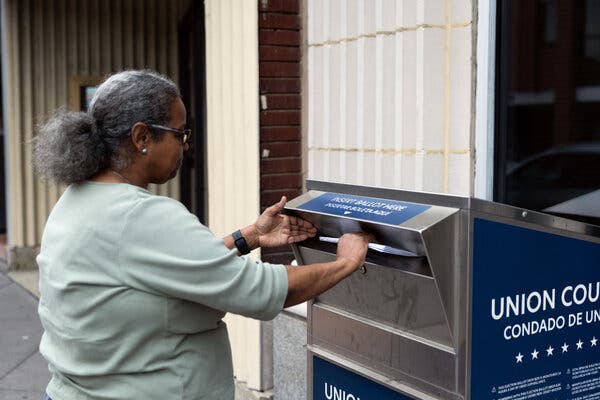
A federal judge ruled on Thursday that, for the moment, an executive order from President Trump, targeting mail-in voting, would not be blocked. This order, signed in March, directs the creation of a federal database of citizens to guide states on voter eligibility.
This decision permits the Trump administration to continue efforts to involve the federal government in election management, a process typically controlled by states. Proposed actions include changes within the Postal Service and the use of data from the Homeland Security Department to compile state voter lists from Social Security and other federal database information.
In a 26-page opinion, Judge Carl J. Nichols stated that it was too early for the court to step in. He noted that much of the executive order had not been implemented, so the potential issues cited in the lawsuit remain theoretical. He also mentioned that if proof arises showing these actions burden state officials or cause confusion, the Democratic-aligned groups that are contesting the order could return to court.
“The court recognizes that the Postal Service may ultimately issue a final rule that directly affects plaintiffs or their members, or that the government may develop state citizenship lists that omit specific individuals due to particularized flaws,” Judge Nichols wrote. “Plaintiffs may, of course, renew their motions if and when those future actions occur.”
This ruling follows aggressive moves by the Trump administration since the previous year to collect voter roll data nationally, opposing several state officials and voting rights organizations. Previous attempts by the administration to request voter information have been struck down by federal judges.
A group of Democratic organizations and lawmakers sued to halt the executive order, claiming it violated federal privacy laws to create a central voter database and unlawfully interfered with state elections by sharing this data with local officials. The lawsuit united cases from groups like the N.A.A.C.P., the League of United Latin American Citizens, and the Democratic Senatorial Campaign Committee, including prominent figures like Senate Minority Leader Chuck Schumer and House Minority Leader Hakeem Jeffries.
 Federal Appeals Court Decision Against Trump’s ‘Third-Country’ Deportation Policy
 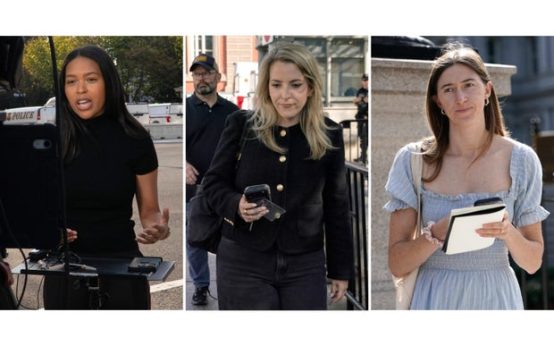 President Trump’s Controversial Ban on Media Outlets Sparks Press Freedom Concerns
  U.S. Security Agreement in Greenland Sparks Optimism and Concerns
 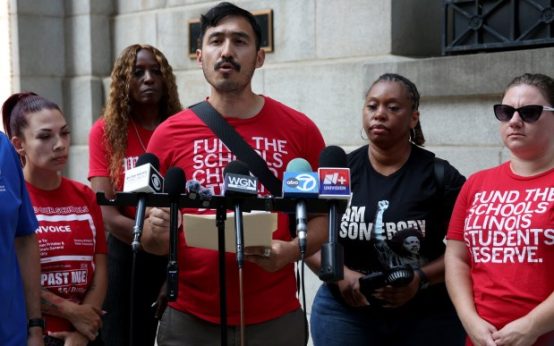 Cook County’s Property Tax Bridge Loans
  A Controversial Stance on Immigration Policies Sparks Debate in South Carolina
  Trump Administration Challenges In-State Tuition for Undocumented Students