
Members of St. Paul Armenian Apostolic Church in Waukegan met the Very Rev. Bayrour Shernezian during the Easter weekend last April. Invited by the church’s board and its pastor, Father Daron Stepanian, he contributed to the Holy Friday Candlelight Service.
Born in Beirut, Rev. Shernezian studied at the Armenian Theological Seminary in Antelias, Lebanon for eight years. In 2020, he became the seminary’s dean and took charge of an orphanage with 40 children of various backgrounds. During his visit to St. Paul Armenian Apostolic Church, he shared insights about the situation in Lebanon.
More than 100 days into ongoing military operations by American-Israeli forces against Iran, a fragile ceasefire persists. In Lebanon, Israeli forces are engaged in a campaign against Hezbollah militants, targeting infrastructure in Beirut. Recent air strikes in south Lebanon have led to further displacement. Rev. Shernezian maintains contact with his congregation to report on the local consequences for civilians.
“As always is, it is a battlefield, unfortunately between powers against a small country, a very beautiful country, where there are different religious denominations living together,” he said. “There are Christians, Orthodox, Protestant, Evangelical, also Muslim denominations, Shiite, Sunni, Alawi, Druze…so, there is a religious diversity.”
Rev. Shernezian emphasized Lebanon’s religious diversity and the sense of unity among its citizens. The areas around south Lebanon and Beirut, near the airport, have faced significant bombings. Over a million residents have relocated to northern and eastern parts of the country seeking refuge.
“They are on the streets; they live in their cars because they don’t have any place,” Rev. Shernezian noted. “The government provided some schools, soccer fields, so they can put up tents, but we don’t know what their future is. Many people, because of the economic crisis, lost everything.”
Concerns about economic losses compound the crisis. “What does it mean to live and work all your life, now comes time to enjoy your life, and suddenly, you have nothing in your bank, all is gone,” he stated. “They can give it back to you, but at a very low rate…that means nothing to you.”
Fr. Stepanian expressed his distress over the situation. “Families are being displaced because their homes were destroyed on the basis of militants hiding in the buildings. To do these things to innocent people is something that makes no sense.”
Rev. Shernezian mentioned the warnings often given before bombings, yet the unpredictability remains. “More than a million Lebanese from the south are emigrating to safe areas, and sometimes Israel bombs these places, saying a terrorist escaped there,” he explained.
This uncertainty influences the locals’ willingness to host refugees. “People are afraid to welcome refugees, scared that someone is a target,” he added. “The most traumatizing thing is to always hear the bombardments. Our seminary…we hear it. It is not a big country. You can hear it, anywhere.”
Rev. Shernezian also expressed concern for the youth living amidst this atmosphere. Despite the challenges, there remains a sense of hope among the people.
St. Paul board member, Arda Haroian Bowles, highlighted the importance of such updates. “We need this kind of direct communication. It’s also a way of regeneration, appealing to young people with the truth and their own worth as human beings.”
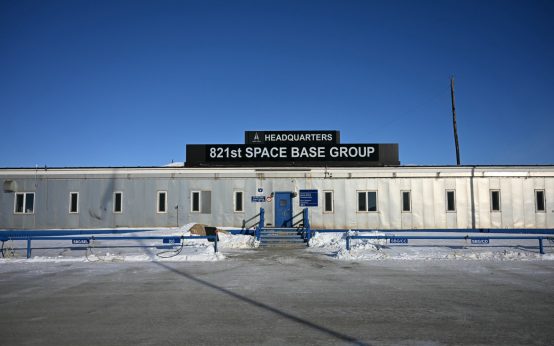 New U.S. Military Bases Planned in Greenland Amid Strategic Security Deal
 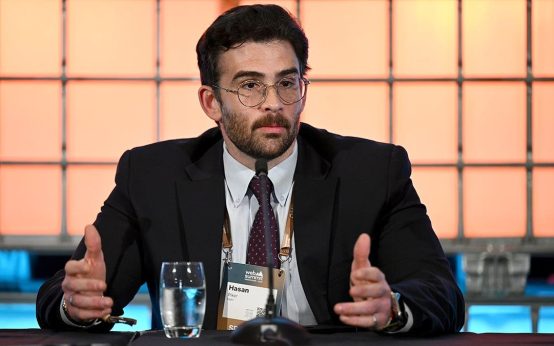 Twitch Streamer Hasan Piker Discusses Controversial Commentary
  A Shifting Political Landscape: The Decline of Autocratic Power
  Trump Delivers Warning to Iran, Cuba at UN General Assembly
  Lukashenko and Putin’s Unique Relationship and Belarus’ Strategic Role
  Alan Ritchson Faces Backlash Over Political Remarks