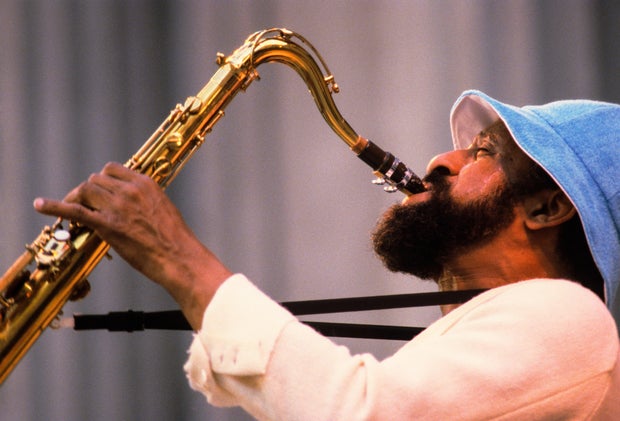
Sonny Rollins, the acclaimed tenor saxophonist known for his bold and unique style, passed away on Monday at 95. His spokesperson, Terri Hinte, shared that Rollins died at his home in Woodstock, New York, though the precise cause of death was not specified. Hinte mentioned that Rollins faced various health challenges, leading to him being mostly housebound in recent years.
Rollins began his extraordinary journey as a teenage prodigy, evolving into a pivotal figure in jazz with his standout improvisational talent. Often drawing comparisons with John Coltrane and Charlie Parker, he emerged as one of bebop’s last remaining icons. In the wider music world, Rollins reached rock audiences through his saxophone work on the Rolling Stones’ 1981 album “Tattoo You,” notably for the track “Waiting on a Friend.”
Despite his acclaim, Rollins was known for his dissatisfaction with his music. He frequently stepped away from performing, all the while exploring new styles. He considered his musical journey as a continuous work in progress, a notion he connected with throughout his career.
While Rollins’ early bebop years were adored by fans, he expressed discomfort revisiting past work, often focusing on imperfections. In a 2007 interview with the Associated Press, he shared, “I don’t consider myself a musician that has learned as much as I want to learn.” Even in the 1990s and 2000s, Rollins produced albums that garnered critical acclaim. Despite eventually retiring from performing due to pulmonary fibrosis, a lung condition, he maintained his practice routine into his 80s.
Reflecting on his career, Rollins revealed to the New York Times in 2020 that his music performances connected him to a larger existence. “I felt a communication; I felt that I was part of something,” he noted.
In recognition of his work, Rollins was awarded a Grammy in 2001 for best jazz instrumental album, and again in 2006 for his solo work on “Why Was I Born” from “Without a Song: The 9/11 Concert.” Rollins had been evacuated close to ground zero on September 11, 2001, but was urged by his wife and manager, Lucille, to proceed with a planned concert in Boston, which led to this celebrated recording.
“I realized that this is the way life is,” Rollins recalled. “… I don’t know why this happens. I don’t know why people kill each other, hate each other. But it’s part of life.”
He is survived by his nephew Clifton Anderson and nieces Vallyn Anderson and Gabrielle DeGroat.
Theodore Walter Rollins was born in Harlem on September 7, 1930. Raised in a musical family, he was exposed to music early, falling in love with the saxophone as a young child. Despite early setbacks, including a battle with heroin addiction that led to time in jail, Rollins emerged stronger. “It’s a place that I don’t want to go back to,” he said.
After rehabilitation, Rollins resumed his music career, returning to major acclaim with the Max Roach-Clifford Brown quintet. His 1956 album “Saxophone Colossus” cemented his reputation as a leading saxophonist.
In the early 60s, Rollins retreated from the spotlight to hone his craft, practicing intensely on the Williamsburg Bridge. This commitment to artistry over popularity shaped his career and music philosophy. He embraced free jazz, expanding his approach and audience despite divisive fan reactions.
Rollins’ later years marked his growing influence, securing him a Guggenheim fellowship and induction into the Downbeat Hall of Fame. Mainstream recognition followed, culminating in his Kennedy Center Honors in 2011. Despite his passing, his vast collection of recordings lives on, leaving a lasting legacy.
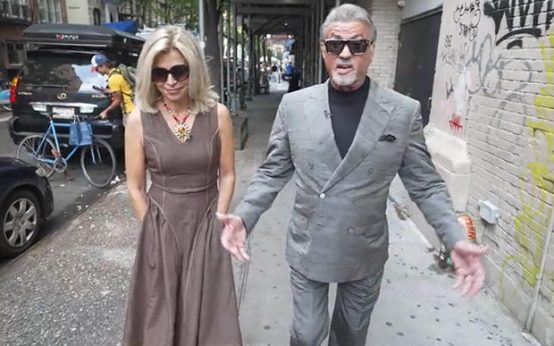 Sylvester Stallone’s Journey from Struggles to Success
  Revival of Son Jarocho: A Musical Heritage in Veracruz
  Rising Optimism Amid Box Office Success and YouTube Influences
  Bobby Pulido’s Unique Congressional Bid
 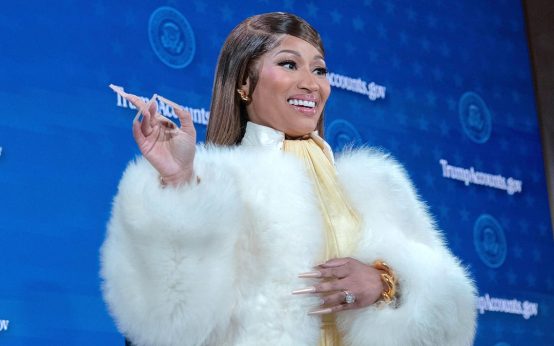 Nicki Minaj Discusses Political Views in Interview with Lara Trump
 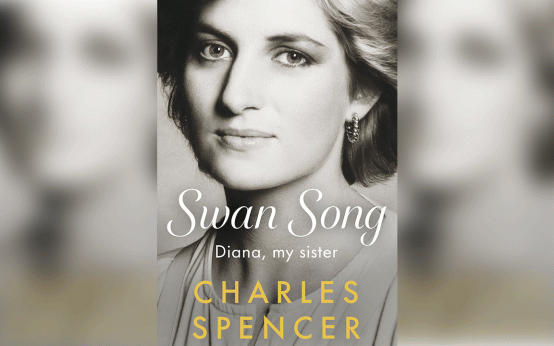 Charles Spencer’s Memoir ‘Swan Song’ Reveals Princess Diana’s Private World