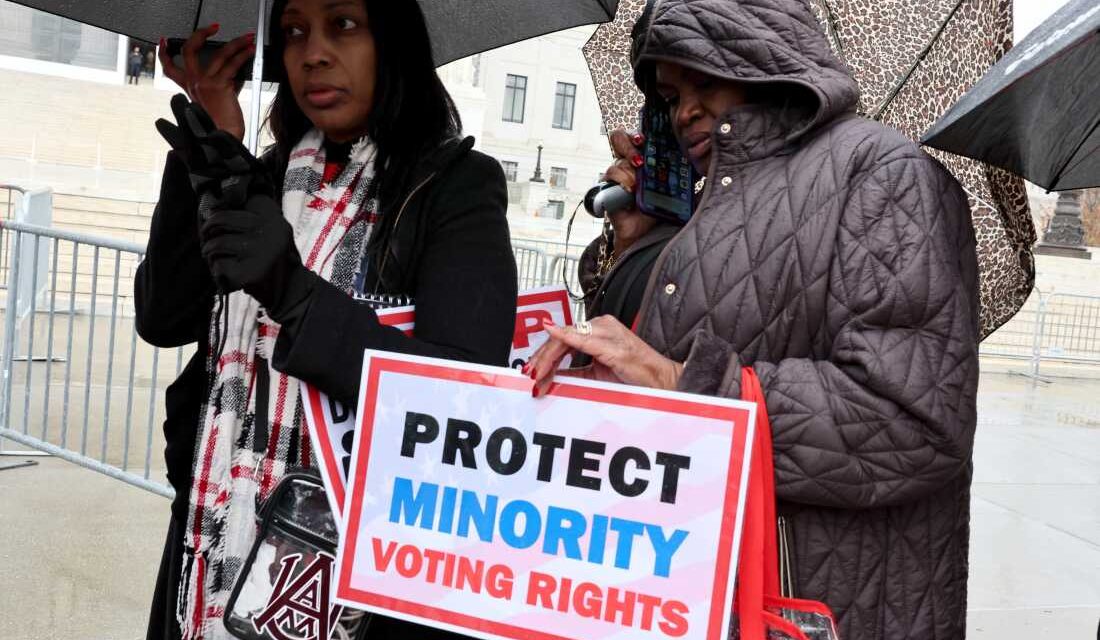
Demonstrators outside the U.S. Supreme Court in Washington, D.C., displayed signs with messages like “PROTECT MINORITY VOTING RIGHTS” in 2025. This occurred after the Supreme Court chose not to review a lower court’s ruling, further weakening the Voting Rights Act. The court’s decision came on Monday, leaving intact a 2025 appeals panel ruling that impacts minority voter protections in seven states.
The ruling affects Arkansas, Iowa, Minnesota, Missouri, Nebraska, North Dakota, and South Dakota. According to the 8th U.S. Circuit Court of Appeals, private individuals and groups cannot sue to enforce Section 208 of the Voting Rights Act. Section 208 allows voters needing assistance, due to disability or inability to read or write, to receive help from a person of their choice.
This decision follows a wider trend of changes weakening protections under the Voting Rights Act. Two months ago, the conservative majority on the court issued a ruling that significantly impacted redistricting processes. After undermining Section 2 protections against racial discrimination in redistricting, the high court decided not to consider cases related to a “private right of action.” These cases involved Black voters in Mississippi and Native American voters in North Dakota.
For decades, enforcement of the Voting Rights Act has largely depended on lawsuits from private parties. But recent legal interpretations challenge this approach, asserting that only the U.S. attorney general can file such lawsuits.
Justice Neil Gorsuch, in 2021, questioned the private right of action in a brief opinion. Subsequent arguments from Republican officials suggest that only the Justice Department can bring lawsuits under specific sections of the Voting Rights Act. This interpretation could reduce the number of voting rights lawsuits due to the Justice Department’s finite resources and changing priorities with different administrations.
The case the Supreme Court declined involved Arkansas United, an advocacy group that aids voters with limited English skills. The group contested an Arkansas law restricting non-poll workers from assisting more than six voters, claiming it violated Section 208. In 2022, a federal judge agreed. However, after an appeal by GOP state officials, the 8th Circuit ruled that private groups could not file such lawsuits.
The 8th Circuit remains the sole federal appeals court that has diverged from longstanding precedent regarding private rights of action under Sections 2 and 208 of the Voting Rights Act.
 Federal Appeals Court Decision Against Trump’s ‘Third-Country’ Deportation Policy
 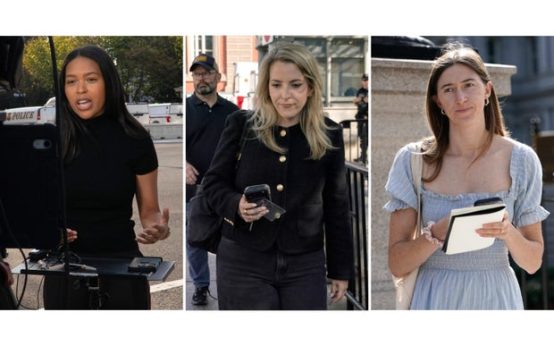 President Trump’s Controversial Ban on Media Outlets Sparks Press Freedom Concerns
 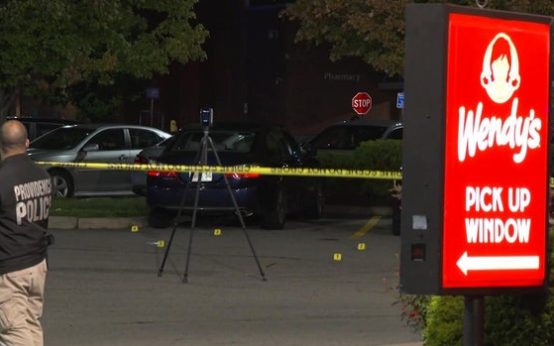 UMass Dartmouth Football Player Killed in Providence Stabbing Incident
  U.S. Security Agreement in Greenland Sparks Optimism and Concerns
 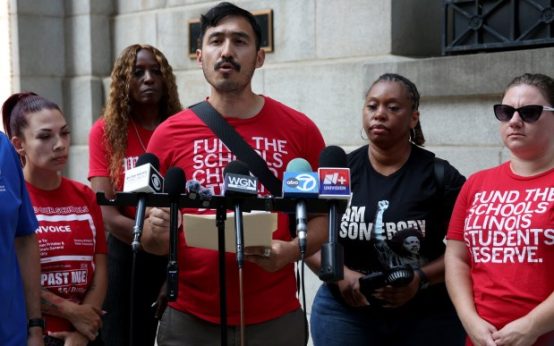 Cook County’s Property Tax Bridge Loans
  A Controversial Stance on Immigration Policies Sparks Debate in South Carolina