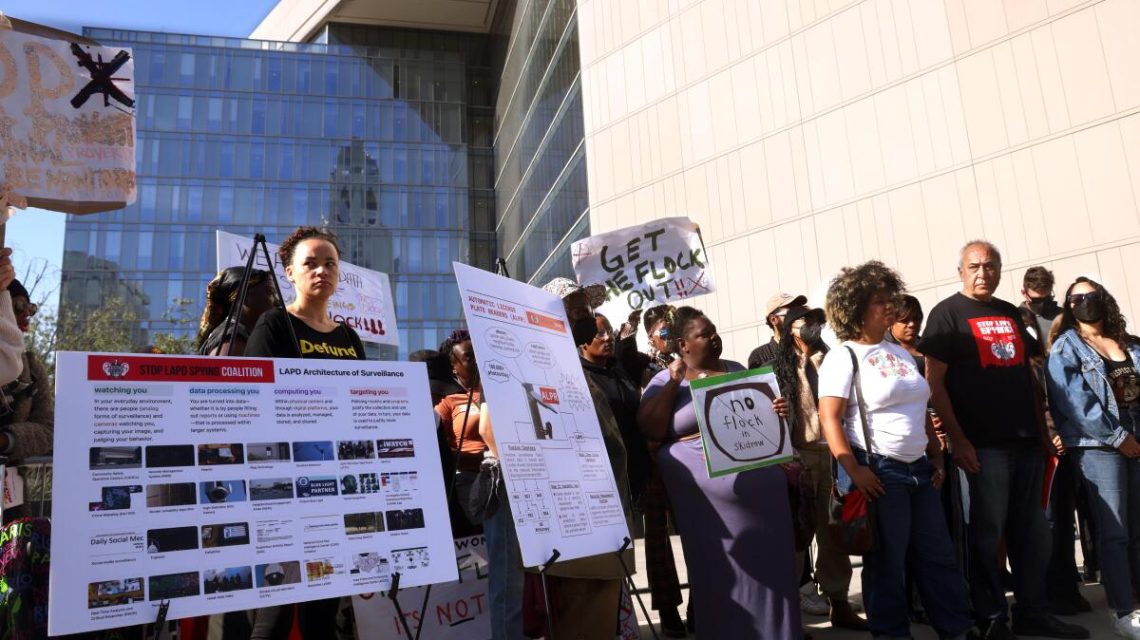
The Los Angeles Bureau of Street Lighting has primarily dealt with maintaining the city’s lampposts, but recently found itself involved in a controversial debate over surveillance technology. This centers on its relationship with Flock Safety, a company criticized for enabling data sharing that supported federal immigration enforcement.
Flock Safety operates automated license plate readers in Los Angeles, aiding authorities in tracking stolen vehicles and known fugitives. These devices are often mounted on city light poles, thus implicating the Bureau of Street Lighting in their installation. Reports of Flock’s sharing data with U.S. Immigration and Customs Enforcement have led several cities to sever ties, although Los Angeles continues to employ the technology with the support of the LAPD.
A review of extensive email correspondence, acquired by The Times, shows how community organizations, law enforcement supporters, and political figures have pressed the Bureau of Street Lighting to hasten the deployment of these surveillance tools. Flock states that approximately 5,000 law enforcement agencies in the U.S. work with them, and emphasize their compliance with California law regarding data sharing limitations. A spokesperson, MoMo Zhou, claimed that the technology fosters transparency and local control, with a standard practice of data deletion after 30 days.
The Bureau of Street Lighting, employing 177 staff with a budget of $49.4 million, typically focuses on maintaining over 210,000 streetlights and electrical vehicle charging stations. Yet, it now faces scrutiny over its role in the debate on police surveillance.
Calls for transparency have led to inquiries into the LAPD’s collaboration with Flock, with the Police Commission seeking reports on information collection and sharing practices. The commission has also resisted approving donations of Flock cameras and initiated audits into the technology’s use.
City leadership is divided on the issue, as evidenced by Councilmember Ysabel Jurado’s motion against further agreements with Flock Safety. However, documents show pressure continues, with some council offices and community groups advocating for Flock. Technical considerations regarding light pole stability have also arisen, with safety risks highlighted by the Bureau.
The role of nonprofits like the Los Angeles Police Foundation is significant, as they fund technology procurement and push for policy changes to expedite installations. The foundation has notably enabled donations of Flock cameras, which were mainly placed in affluent areas.
Key figures in the approval process, such as foundation Executive Director Dana Katz, have taken steps to mitigate costs and delay. Katz proposed using Flock’s poles where city ones are unavailable. Communications reveal her frustration with prolonged waiting periods and bureaucratic hurdles.
Email records show Flock’s active engagement with the Bureau of Street Lighting from 2024 onwards, including offers to support theft deterrence by donating equipment. Interactions with former council members and lobbyists further indicate the company’s efforts to secure partnerships with the city.
Surveillance preparations intensified when Flock contributed additional readers following local wildfires, underscoring ongoing efforts to strengthen security in affected areas. The company and city officials have since focused on accelerating approval processes for plate reader installations.
Amid appeals from various stakeholders, LAPD officials have encouraged the Bureau of Street Lighting to prioritize enhancing community safety via these technologies. Ongoing dialogues reflect complex considerations surrounding law enforcement priorities and public safety.
 UMass Dartmouth Football Player Killed in Providence Stabbing Incident
  Understanding the Federal Reserve’s Interest Rate Adjustments
  Federal Judge Maintains Oversight on Maricopa County Sheriff’s Office for Racial Profiling Issues
  Latino Demographics in Chicago: A Shifting Landscape
  Chicago’s Business Community: A Pillar of Civic Engagement
  Controversy at University of Texas Over Racist Incident