
Researchers on a challenging mission to locate Amelia Earhart’s missing aircraft have encountered a significant challenge. Purdue University recently declared that the team found no decisive evidence to support the Taraia Object hypothesis. This theory proposed that remnants of Earhart’s plane were in a lagoon on Nikumaroro, a remote Pacific island.
The Taraia Object Hypothesis
The hypothesis was based on the Taraia Object, a visual anomaly detected in satellite images in 2020. Researchers speculated the object might be wreckage from Earhart’s Lockheed Electra 10-E. However, the university reported that it was “likely a collection of large trees deposited along the peninsula’s sandspit.”
“By the time the team arrived at the site, a large portion of the debris had fragmented and washed away, leaving only a single Y-shaped segment,” the university noted.
Researchers noted the remaining fragment’s reflective quality came from a “carbonate veneer,” which led to the initial metallic appearance. Other objects found were similarly covered with a shiny concretized mixture of coral sand.
The Expedition’s Findings
Despite the unfavorable results, Rick Pettigrew, executive director of the Archaeological Legacy Institute and leader of the expedition, expressed that the team “remains in great spirits and proud of what was accomplished.” Researchers reported achieving their goal of identifying the Taraia Object, extending thanks to donors who made the quest possible.
The expedition also uncovered several artifacts, including a 30-inch steel tube, which could provide insights into how debris moves through the lagoon and gathers along the Taraia Peninsula. Although none of the artifacts were conclusively related to Earhart’s plane, they may assist with future research.
Hope in Further Research
The loss of Earhart’s aircraft on July 2, 1937, while attempting a global flight, continues to intrigue researchers. The expedition did not yield the “smoking gun” linking Earhart to Nikumaroro, yet the team reaffirms belief in the broader hypothesis that suggests Earhart might have arrived at the island.
Earhart and her navigator, Fred Noonan, disappeared while flying from Lae, New Guinea, to Howland Island, with Nikumaroro becoming a central point in the ongoing investigation.
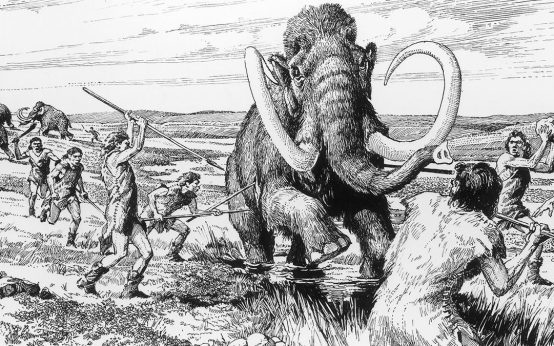 Researchers Redefine Early Human Migration Timeline in North America
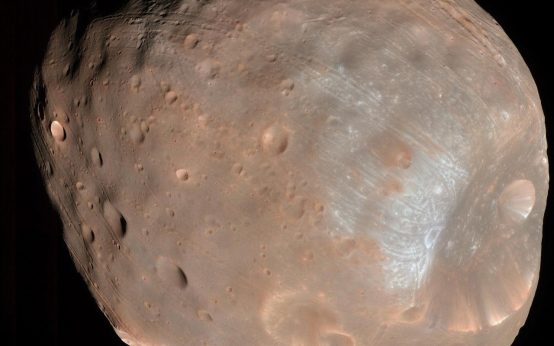 Japan’s Mission to Explore Mars’ Moons
 Cancer Cells’ Response to Confinement
 Nor’easter Threatens East Coast with Strong Winds and Coastal Hazards
 Gulf of Mexico’s Twilight Zone Ecosystem Severely Impacted by 2010 Deepwater Horizon Oil Spill
 Reassembling the F-117 Nighthawk at Smithsonian