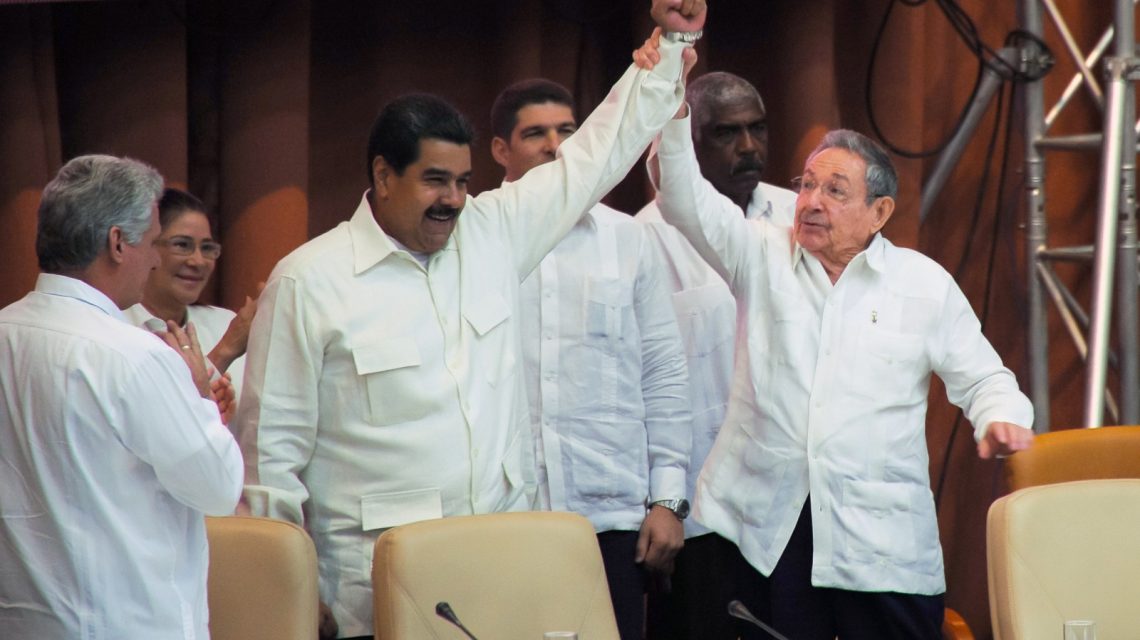
The recent U.S. indictment of former Cuban President Raúl Castro has led to speculation about possible similar actions against Cuba, like those taken against Venezuelan President Nicolás Maduro earlier this year. Maduro was captured in a daring Delta Force raid in January, resulting in the death of 32 Cuban personnel assigned to protect him. He was charged with ‘narco-terrorism’ during the Trump administration’s first term in 2020 and is facing trial in New York City.
Castro, now 94 years old, succeeded his brother Fidel in 2008 and governed for ten years. He faces U.S. charges related to his alleged involvement in the Cuban military’s 1996 operation that shot down two civilian planes operated by an activist group connected to opposition forces in exile. The Department of Justice revealed the indictment on Wednesday.
The decision to legally pursue Castro coincides with heightened U.S.-Cuba tensions. Weeks after Maduro’s abduction—a key energy ally for Havana—the Trump administration declared an oil blockade on Cuba and hinted at possible military intervention if the country did not make a deal.
Addressing Relations with Iran, Venezuela, and Cuba
In February, Trump executed military threats against another adversary, Iran, launching a joint operation with Israel that resulted in the death of Ayatollah Ali Khamenei, Iran’s supreme leader. The conflict remains at a standstill, but the White House’s focus on Cuba endures, with Trump naming it the ‘next’ target.
Christopher Sabatini, a senior fellow for Latin America at Chatham House, explained attempts in Venezuela, Iran, and Cuba to escalate threats, military presence, and coercive rhetoric to promote change. He suggested that raising stakes was not merely a negotiation strategy but a hope for change. However, Cuba remains firm, expressing willingness to talk while rejecting U.S.-imposed governmental changes, a stance that could prolong tensions.
Sabatini noted that continued impasse might lead to further escalation. ‘There is an inevitability of some form of action if the threats and the saber-rattling don’t work,’ he said.
Potential U.S. Military Actions in Cuba
Before Wednesday’s announcement, analysts had speculated Castro’s indictment might precede military action. The charges coincided with a video address by Secretary of State Marco Rubio, in which he spoke in Spanish directly to the Cuban people. A Cuban-American and long-time critic of the nation’s communist regime, Rubio blamed the government for economic struggles and proposed a ‘new relationship.’
Trump, however, signaled no immediate military actions during a press session at the White House. Asked about potential escalation with Cuba, Trump stated, ‘No, there won’t be escalation. I don’t think there need to be,’ while commenting on the nation’s current condition.
Nevertheless, options remain for more aggressive measures:
- Targeted Special Operations Forces raids, akin to those in Venezuela.
- Large-scale air attacks similar to those against Iran.
- Full-scale invasion due to Cuba’s outdated military, though expensive and facing guerrilla threats.
Despite these possibilities, nearly every scenario requires considerable Middle East-allocated resources.
Cuba’s Plans to ‘Fight Back’
In a previous interview with Newsweek, Cuban President Miguel Díaz-Canel expressed readiness to retaliate if the U.S. pursued military conflict, showing no fear for personal safety. He emphasized the nation’s leadership unity, ideological cohesion, and revolutionary discipline as deterrents against U.S. actions.
Sabatini expressed skepticism over Washington finding a Venezuelan-like figure to replace Castro, noting the Cuban government’s cohesive structure and indoctrination. He highlighted the difficulty of finding compliant leaders and the absence of independent civil organizations to facilitate exchange.
Sabatini also commented that removing Castro might not disrupt the system largely due to the military-led GAESA conglomerate he aided, at the center of Rubio’s critiques. ‘Beyond Raúl Castro—he’s old, he’s a historico—what he created, especially as defense minister, will hold many of them in check,’ he said.
Legal Concerns Over U.S. Actions in Venezuela and Cuba
Trump’s use of indictments to address foreign nations has drawn legal scrutiny. Tess Bridgeman, co-editor of Just Security, explained these operations violate the principle prohibiting force use except for legitimate self-defense or UN authorization.
Bridgeman noted Cuba has not attacked the U.S. nor posed immediate threats, prohibiting claims of self-defense. Any force against Cuba, including forcing leadership changes, would be aggression acts. She argued that international norms protect smaller states, and indictments don’t validate aggressive actions.
‘Even if lawful under international law (which they are not), the President lacks domestic authority to wage war without Congress,’ she added, referring to violations in Iran and Venezuela.
Benjamin Gedan, director of the Stimson Center Latin America program, also questioned the legality of operations aligned with Castro’s indictment but highlighted the administration’s past disregard of legal obstacles.
‘Delta Force commandos are not bounty hunters, and an indictment does not give Trump permission to invade Cuba,’ Gedan shared with Newsweek. ‘But that did not stop Trump from deploying U.S. troops to Caracas for Maduro’s capture.’
Cuba’s Statement on the 1996 Incident
Cuba has contested the narrative surrounding the 1996 event at the center of these legal actions. The Cuban government emphasized U.S. illegitimacy and jurisdictional limitations in a statement to Newsweek from their U.N. mission.
‘This is a despicable and infamous act of political provocation, manipulating the incident that led to the downing over Cuban airspace in February 1996 of two planes operated by ‘Brothers to the Rescue,” the statement said.
Brothers to the Rescue, led by Cuban dissident José Basulto, is accused of repeated hostile Cuban airspace violations. The Justice Department claims deliberate training to target the planes, causing four fatalities.
The Cuban government restated their ‘commitment to peace and determination to exercise the inalienable right to self-defense,’ expressing full support for Castro.
Symbolic Impact and Pressure on Cuba
As surveillance flights continue over Cuba, escalation remains primarily economic, legal, and political without applied hard power.
Gedan noted the indictment’s tactical value as a pressure tool for negotiations resulting in potential economic reforms favorable for U.S. investment.
‘Raúl’s retirement has become considerably less comfortable,’ Gedan stated. ‘But it does not signal imminent invasion. Trump remains occupied in the Middle East, and his supporters aren’t eager for further military engagements.’
Gedan emphasized the credibility of the threat, potentially influencing U.S. negotiations for reform.
Richard Feinberg, expert in international political economy and former U.S. government official, argued focusing solely on Castro misses broader issues.
‘There’s no Venezuela playbook for Cuba; even if kidnapping Raúl Castro were feasible, it wouldn’t significantly resolve deeper problems,’ Feinberg stated. He highlighted Cuba’s ruling structure beyond individual influence.
Feinberg interpreted the indictment as targeting Cuban Americans seeking retribution against the Castro family over decades.
 Economic Challenges in Senator Collins’ Reelection Bid
  Democratic Women’s Caucus Economic Agenda Unveiled
  Partial Reopening of Lafayette Square Near White House
  Innovative Child Care Plans by Mayor-Elect Mamdani
  Challenges Facing President Trump: Nuclear Issues, Climate Crisis, and AI
  Key Developments in U.S. Politics and International Relations